Unit 12
Personal events and experiences
Activity 1: Learn new vocabulary - match the words on the left side with their meanings on the right side
You found 0 of 13 pairs.
No matches yet
Activity 2: Choose the right words from the blue box and write them in the blanks
Activity 3: Listen to the audios and choose the correct stress pattern
Activity 4: Read the poem and answer the questions
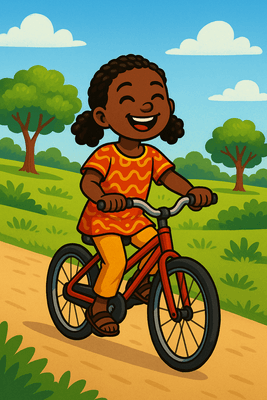
I remember the day I learned to ride, The sun was shining, I smiled with pride. I fell once or twice, but I stood up again, That moment of joy will always remain.
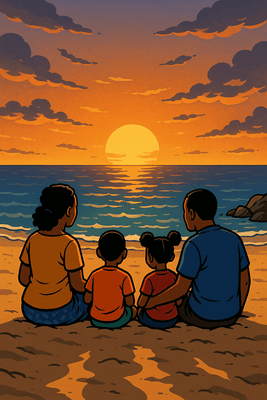
I think of the time we went to the sea, The waves were dancing, wild and free. We laughed and played in the soft, warm sand, A memory forever, gentle and grand.
Each day brings something new and bright, Moments of wonder, pure delight. Our personal events and experiences grow, They shape who we are and help us glow.
Activity 4a: Answer the questions
Activity 5: Learn how to use the Simple Past Tense
1. How to Form the Simple Past:
1a. Regular Verbs: For regular verbs, the past tense is formed by adding -ed to the base form of the verb.
- Example:
- walk → walked
- play → played
- work → worked
Note: For verbs that end in e, just add -d.
- Example:
- love → loved
- dance → danced
1b. Spelling Rules for Regular Verbs:
- If the verb ends in consonant + y, change the y to i and add -ed.
- cry → cried
- If the verb ends in consonant + e, just add -d.
- live → lived
- If the verb ends in a single consonant (except w, x, or y) after a short vowel, double the consonant and add -ed.
- stop → stopped
- plan → planned
1c. Irregular Verbs: Irregular verbs do not follow the regular pattern. You need to memorize their past forms.
- Example:
- go → went
- have → had
- eat → ate
2. When to Use the Simple Past:
2a. Actions that happened and finished in the past
- Example: I visited Tanzania last year.
2b. A series of completed actions in the past
- Example: She woke up, brushed her teeth, and left the house.
2c. Actions that happened at a specific time in the past (often with time expressions like yesterday, last year, in 2010, two days ago, etc.)
- Example: We saw the movie yesterday.
2d. Actions that were habitual in the past but are no longer happening
- Example: When I was a child, I played outside every day.
2e. Past facts or general truths
- Example: People believed the Earth was flat in ancient times.
3. Irregular Simple Past Forms:
Here are some common irregular verbs in the simple past:
| Base Form | Simple Past |
|---|---|
| be | was/were |
| begin | began |
| break | broke |
| bring | brought |
| buy | bought |
| come | came |
| do | did |
| drink | drank |
| drive | drove |
| eat | ate |
| fall | fell |
| get | got |
| give | gave |
| go | went |
| have | had |
| know | knew |
| make | made |
| meet | met |
| see | saw |
| take | took |
| think | thought |
Examples of Irregular Simple Past Forms:
- I went to the market yesterday.
- He ate lunch at noon.
- We saw a great movie last weekend.
- She made a delicious cake for the party.
Activity 5a: Change the verbs into the Simple Past Tense
Activity 6: Fill in the blanks using the verbs in brackets - change them into the Simple Past Tense
Activity 7: Learn and practise the Negative Simple Past
To form a negative sentence in the simple past, we use did not (often shortened to didn't) + the base form of the verb.
1. Structure:
Subject + did not / didn't + base form of the verb
2. Examples:
- I did not go to the beach yesterday. / I didn't go to the beach yesterday.
- She did not play volleyball. / She didn't play volleyball.
- We did not eat lunch at the restaurant. / We didn't eat lunch at the restaurant.
3. Important Notes:
- The auxiliary verb did is always used in the negative form (even with irregular verbs).
- The main verb remains in its base form, not the past tense form.
Activity 7a: Practise building sentences in the Negative Simple Past
Activity 8: Learn and practise questions in the Simple Past
To form questions in the Simple Past tense, we use the auxiliary verb did (for all subjects) and the base form of the main verb (not the past tense form). This means the main verb stays in its basic form, even when asking about past events.
1. Questions with “Did”:
- Structure:Did + Subject + Base form of the verb?
Examples:
- Did you play soccer yesterday?
- Did she enjoy the movie?
- Did they visit the museum last weekend?
2. Negative Questions:
To form a negative question in the Simple Past, we simply add not after did. The structure is:
- Structure:Did + Subject + not + Base form of the verb?
Examples:
- Did you not play soccer yesterday? (Or: Didn't you play soccer yesterday?) (Didn't you play soccer yesterday?)
- Did she not enjoy the movie? (Or: Didn't she enjoy the movie?) (Didn't she enjoy the movie?)
- Did they not visit the museum last weekend? (Or: Didn't they visit the museum?) (Didn't they visit the museum?)
3. Important Notes:
3a. Use of "Did": The auxiliary verb did stays the same, no matter what subject we use (I, you, he, she, it, we, they).
3b. Base form of the verb: The main verb in the question stays in the base form (infinitive) even though the question is in the past.
- Example: Did you eat? (Not ate)
4. Summary:
- To form questions in the Simple Past, we use did + base form of the verb.
- For negative questions, we add not: did not (or the contracted form didn't).
Activity 8a: Choose the correct question for the answer
"No, I didn’t eat ugali last night. I had rice and chicken."
"You ate ugali last night?"
"Did you eat ugali last night?"
"Yes, I did my homework yesterday."
"Did you your homework yesterday?"
"Did you do your homework yesterday?"
"No, I didn't learn for the English test."
"Didn't you learn for the English test?"
"You didn't learn for the English test?"
"Yes, I visited her and we had a great time together."
"Did you visit your grandmother last holiday?"
"Did you visited your grandmother last holiday?"
"Yes, my friends enjoyed the party a lot."
"Didn't your friends enjoy the party?"
"Didn't your friends enjoyed the party?"
"Yes, I learned about the history of Tanzania today."
"Did you learn something new at school today?"
"You learned something new at school today?"
"No, I did not wash my clothes."
"Did you washed your clothes?"
"Did you not wash your clothes?"
"No, I didn't. I walked to school today."
"Did you go to school by bus today?"
"Did you went to school by bus today?"
"No, I didn't help them."
"You did not help your parents to clean the house?"
"Didn't you help your parents to clean the house?"
"No, I didn’t play any sports yesterday."
"Did you played football yesterday?"
"Did you play football yesterday?"
Activity 8b: Write the correct questions for the answers
Activity 9: Listen to the story and decide if the statements are true or false
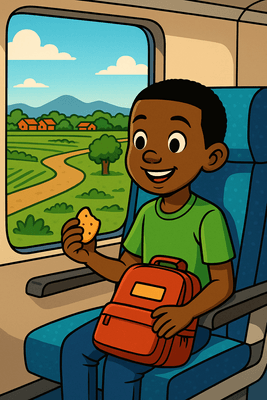
The child travelled by bus to Dodoma.
true
false
The story takes place in Arusha.
true
false
The child brushed the teeth before leaving home.
false
true
The train was dirty and small.
true
false
The seats in the train were soft and comfortable.
true
false
The child slept for most of the train ride.
false
true
The child drank juice and ate snacks.
false
true
The child's family ate dinner after arriving in Dodoma.
false
true